What can I turn into a course or a program?
You have taught the same thing in a room a dozen times. People love it, then go home and forget half. What if the part they forget came back, once a day, as a five-minute practice they can do at their own table?
Three shapes, and you can mix them. A course teaches something in order. A program carries people through a period, such as a week or a month, with a daily rhythm. A protocol is a repeatable practice with fixed steps, the same every time, like a morning routine or a way to run a meeting.
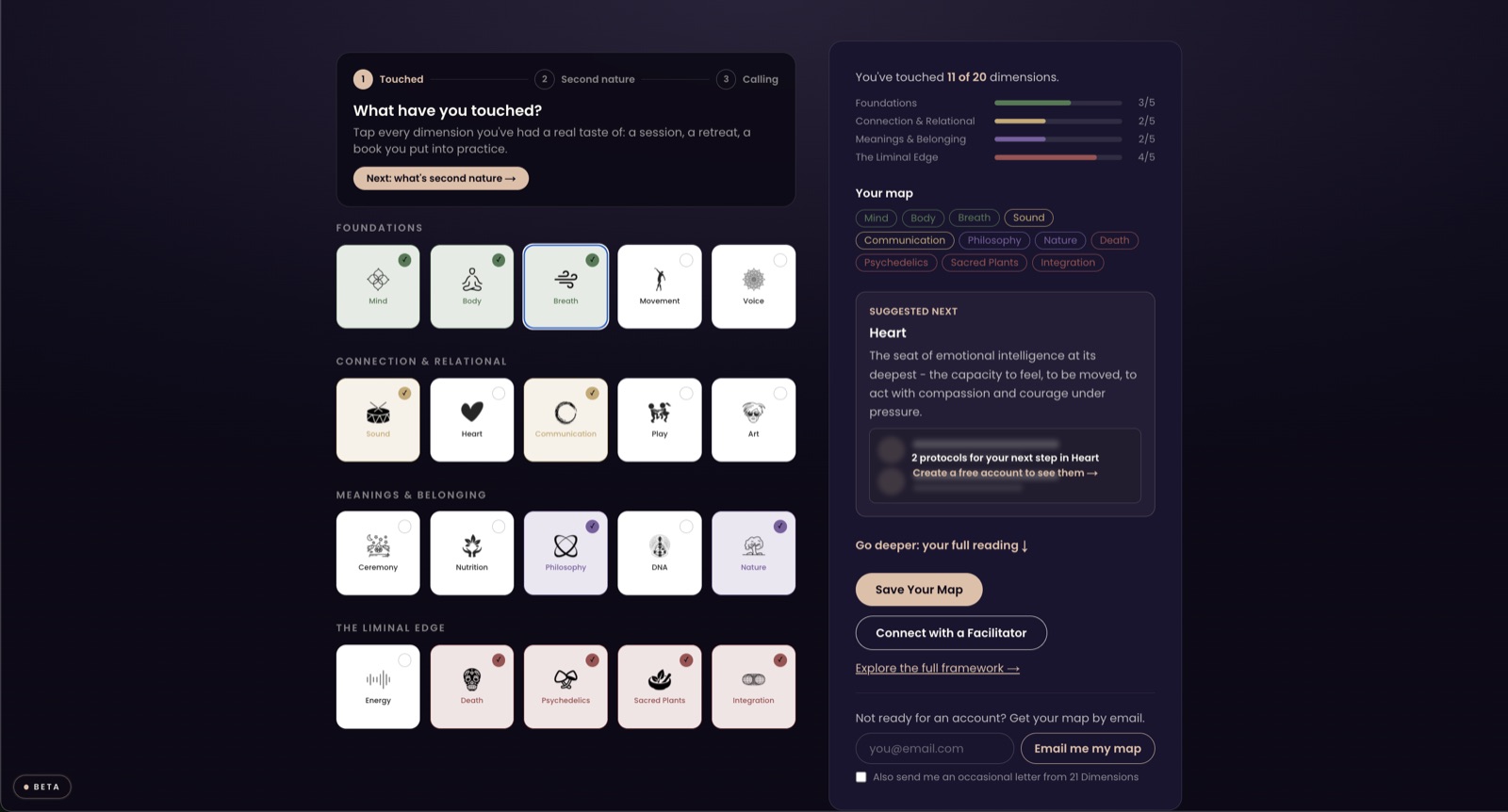
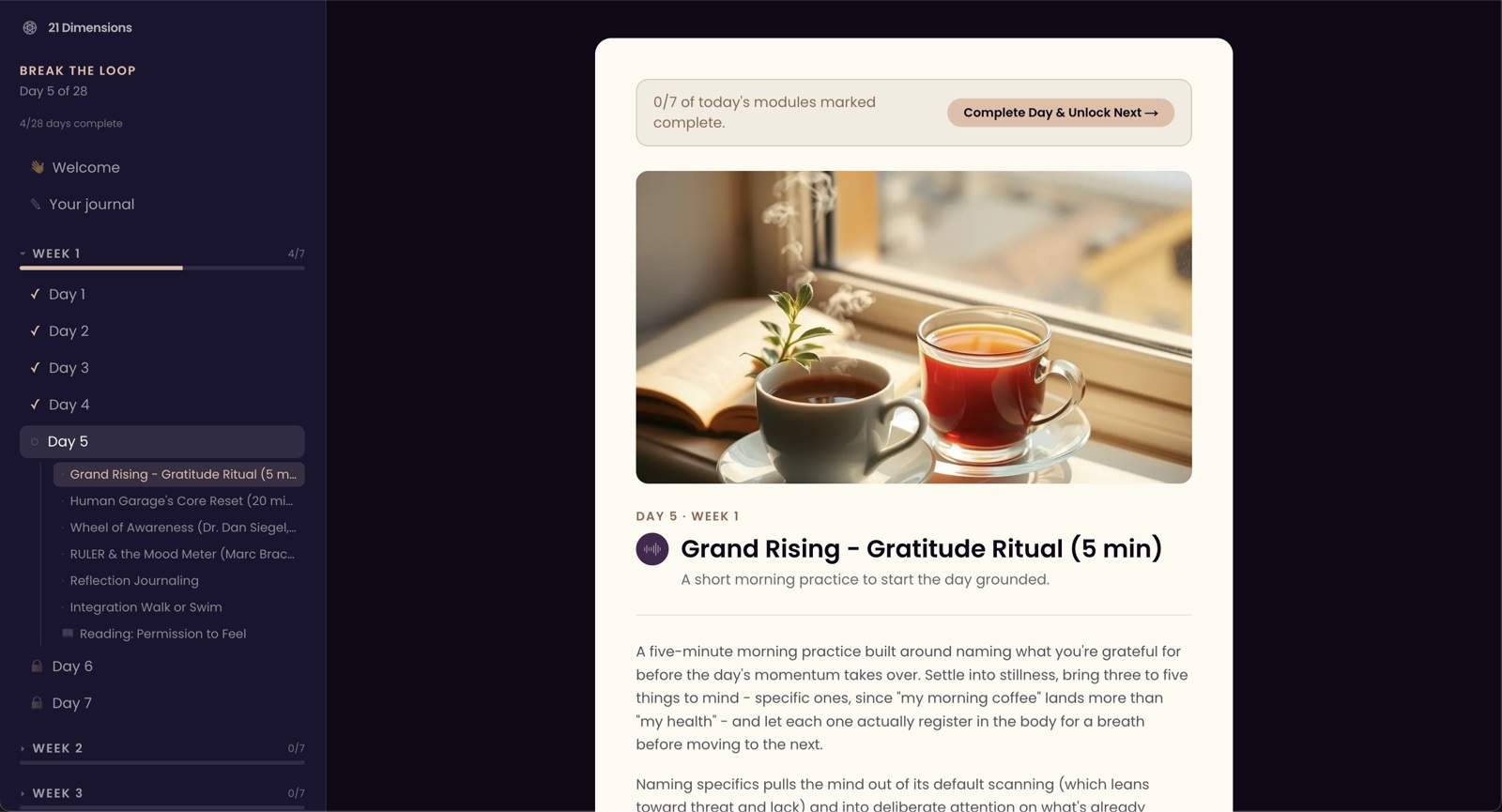
Here is what a program looks like once it is built: Break the Loop on 21 Dimensions, a 28-day container. Each day opens a few short practices, the days unlock one at a time, and a progress line shows how far you have come.
How do I build a course from material I already have?
If you have keynotes, talks, workshops or years of writing, you are not starting from nothing. You are starting from material that has not been put in order yet.
- Gather it: recordings, slides, notes and writing in one folder.
- Get the text out: ask the agent to transcribe recordings and read out slides.
- Find the ideas: ask for every distinct idea you teach, with where it appears.
- Cluster them into three to seven modules around one outcome.
- Cut what repeats or does not serve the outcome. Then write the practices.
Here are my recordings, slides and notes: [files]. Transcribe the recordings, then list every distinct idea I teach, with where it appears. Group them into three to seven modules around this outcome: [outcome]. For each module suggest a title that is a promise, the one idea, a practice of ten minutes at most and what to cut. Quote only what is in my material, and mark every gap as [question for me].
How do I design the path?
- Write the outcome: “After this, the participant can ...”. One sentence.
- List what they must understand and do to get there. Cut everything else.
- Group it in three to seven modules. Each module is a promise, like “Find your quiet minute”, not a topic.
- Give every module one idea, one practice of ten minutes at most and one way to see that it worked.
- Show the path. A progress line people can see does half the work of keeping them going.
Course outline
Say what people can do afterwards. Get an instruction that builds the whole path.
Build a digital course. Outcome: after the course, the participant can [what they can do].
Modules: 5. Each module has: a short reading, a practice to do.
For every module give: a title that is a promise, the one idea, the practice (ten minutes at most), how the participant knows they got it, and what leads into the next module.
Keep a progress path the participant can see, and let them mark each module done. Use BRAND.md for voice and look. Write nothing as fact that I have not given you. Show me the outline first.
How do I write a protocol people actually follow?
A protocol is something to do, not something to read. Each step starts with a verb, takes a set time and says what to notice. Keep it to five to eight steps, and give it a name people can say out loud.
Write a protocol called [name] for [who] that helps them [outcome]. Five to eight steps. Each step: starts with a verb, takes [time], and says what to notice. At the end: how they know it worked and what to repeat tomorrow. Plain words, in my voice following BRAND.md. Write nothing as fact that I have not given you, and do not make medical claims.
How do I deliver it?
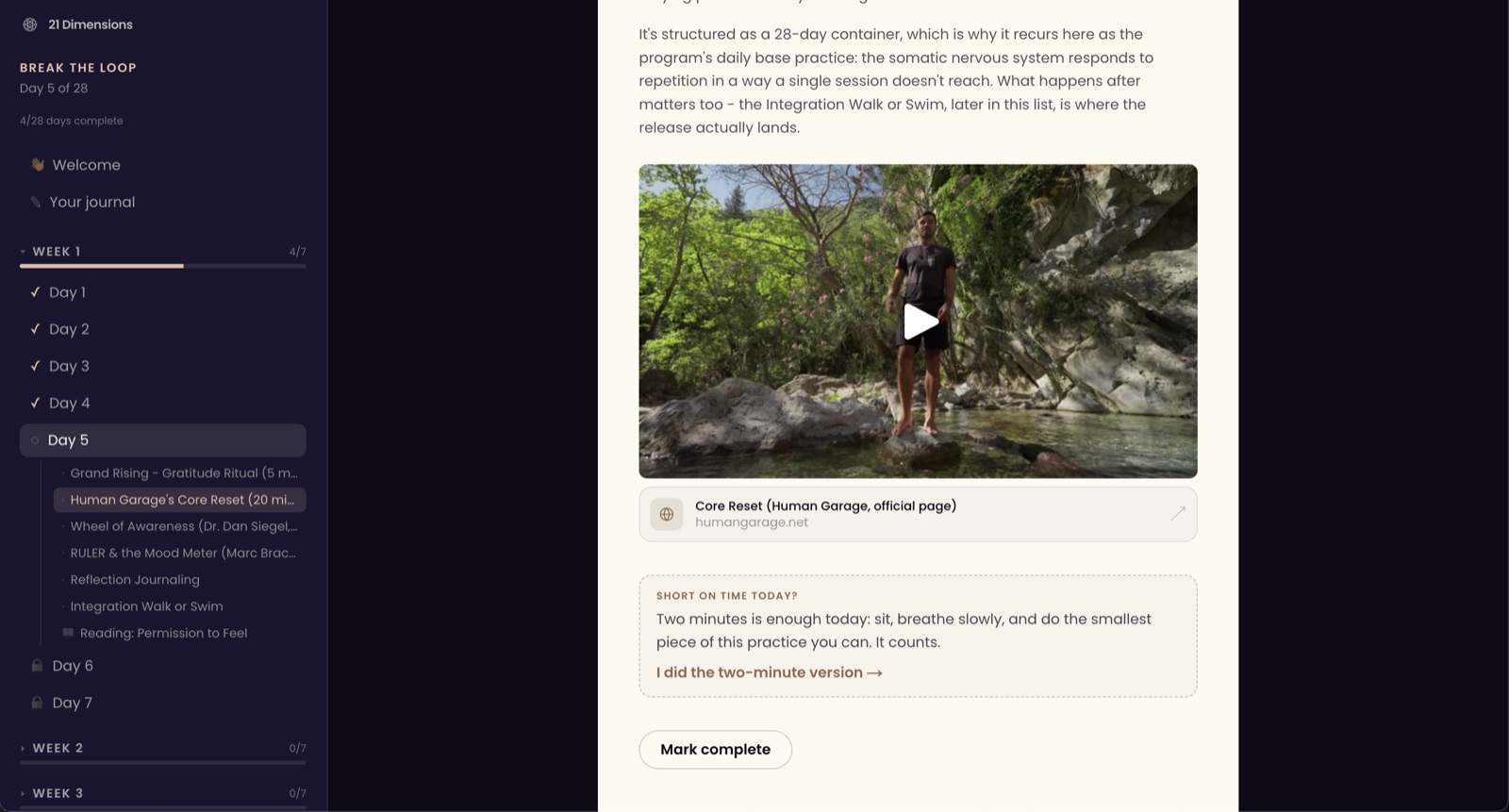
Design a [28]-day program for [who] with the outcome [outcome]. Each day: one practice of five minutes, one optional longer practice, a two-minute version for days when they are short on time, and one short reading. The days unlock one at a time when the day is marked complete. Show progress per week. Use only my material: [files]. Mark every gap as [question for me].
For each practice in the program, write a two-minute version: sit, breathe slowly and do the smallest piece that still counts. One sentence that says it counts. No guilt, no streaks.
Guides for the pieces: get paid with Stripe, email automations with Resend.
What becomes possible?
A course is your knowledge made repeatable. Once it exists it can serve people while you do something else.
- A seven-day program that people join in groups, with one email a day.
- A library of protocols that members can pick from.
- A program built for one company, using the same pieces.
- A free first module that leads to the whole course.
From what I know and have taught: suggest three courses, programs or protocol sets I could build. For each: who it is for, the outcome, the number of modules, what a participant does on day one, and what I would need to write myself. Rank by how soon it could be tested with three real people.
Questions people ask
How long should a course be?
As short as it can be and still deliver the outcome. Three to seven modules is a good start. You can add later.
Can I make health claims?
Be careful. Describe what people do and notice, and do not promise medical effects. Ask a professional if you are unsure.
Who is writing this
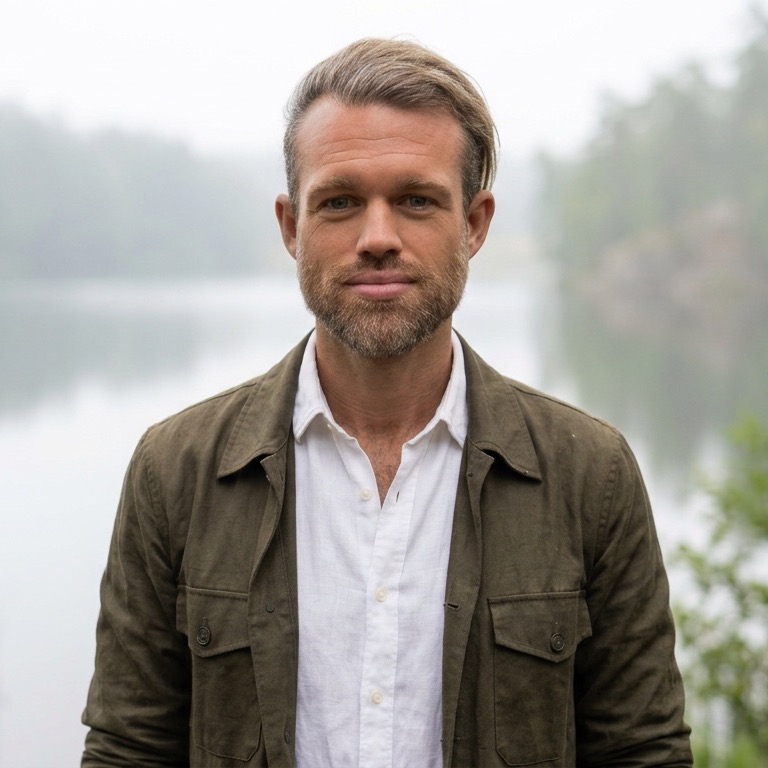
I am Nathaniel, a commercial operator. For twenty years, across four continents and more than fifteen ventures, I have taken research and young companies from idea to customer. Two KTH spin-offs reached joint development agreements with Fortune 500 partners. An indoor farm sold its full production within about ninety days and ended in a joint venture exit. This year I am a commercial expert for the European Innovation Council's Tech to Market programme. Now I build agents, because the hard part of new technology is rarely the technology. It is getting people to want it and use it.
Want to do this together?
In two hours I can build this with you: A digital course or program.