Which fields do I need?
You had a good call on Tuesday. She said “send me something next week”. It is now the following Thursday and you are not sure whether you did. A register would have said so, at the top of your list on Monday.
Fewer than you think. Every field you must fill in is a reason to put off the update.
- Name and company.
- How we met.
- Last contact (date).
- Next step and date. The most important field.
- Status: warm, waiting, client, dormant.
- Value: a rough estimate in money, or empty.
- Notes: what you learned about the person.
How do I make it a habit?
Right after every call, three lines: what was said, what the next step is, and when. You can record it on your phone and ask the agent to write it out and add it.
Three lines after a call
Do this right after every conversation. It takes under a minute.
Update [name] in the client list: spoke today. [what we agreed, in one or two sentences] Next step: [what], no later than [date]. Status: warm. Show me how the record looks after the change.
How do I see who to contact today?
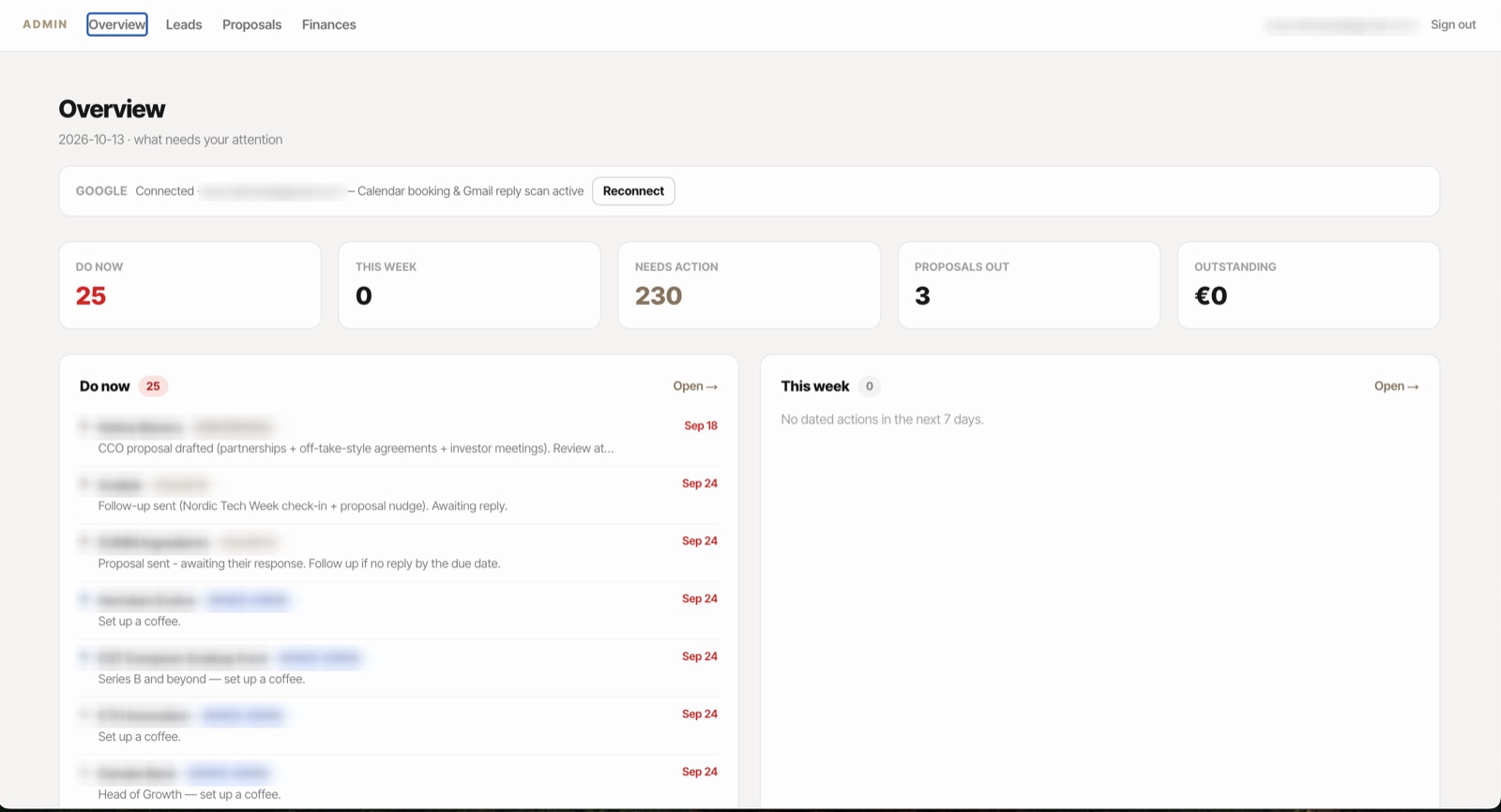
Read the client list and show who I should contact today: those whose next step has passed or falls today, sorted by status and value. For each person: one sentence on what last happened and a suggested first message in my voice following BRAND.md. Send nothing.
Once a week, spend twenty minutes on unanswered threads and overdue steps. One reminder is enough, then you let it go until the answer comes.
What about personal data?
A client register holds personal data, so the GDPR applies. Keep what you need, tell people you keep it, and delete it when someone asks. This is not legal advice: read what the Swedish data protection authority (IMY) says, and ask a lawyer if you are unsure. Do not write sensitive details about health or opinions in the notes without a clear basis.
What becomes possible?
A register your agent can read does things you never have time to do yourself.
- Suggest who in the list should meet whom, and write the introduction.
- Find people you have not spoken to in three months who said they were interested.
- Combine what many clients ask for into an idea for your next service.
- Prepare you for a meeting with everything you know about the person.
Read the client list. Which two people should meet, and why? Write an introduction in my voice that I can send. Which three people have I not contacted in a while, and should this week? What pattern do you see in what clients ask for?
Questions people ask
Is a spreadsheet enough?
Often, yes. The point is the fields and the routine, not the tool. What the agent adds is that it can read the list and write suggestions.
Should the agent send follow-ups itself?
Not at first. Let it write drafts and send them yourself. You own the relationship.
Sources

Who is writing this
I am Nathaniel, a commercial operator. For twenty years, across four continents and more than fifteen ventures, I have taken research and young companies from idea to customer. Two KTH spin-offs reached joint development agreements with Fortune 500 partners. An indoor farm sold its full production within about ninety days and ended in a joint venture exit. This year I am a commercial expert for the European Innovation Council's Tech to Market programme. Now I build agents, because the hard part of new technology is rarely the technology. It is getting people to want it and use it.
Want to do this together?
In two hours I can build this with you: A simple CRM.